The Shopify Gateway Leakage: How Non-Refundable Processing Fees and Multi-Currency Conversion Markups Quietly Drain 5% of Your Top-Line Revenue
Many Shopify merchants mistakenly assume that issuing a refund reverses the financial transaction entirely. In reality, payment gateways permanently retain your processing fees, and hidden multi-currency conversion markups quietly siphon off your margins, transforming high-volume cross-border scaling into an invisible cash drain.

The Hook & The Silent Problem: The Invisible Tollbooth on Your Storefront
Every Shopify merchant understands the basic cost of doing business: ad spend, inventory procurement, and shipping. You calculate these numbers meticulously, bake them into your pricing model, and watch your gross revenue scale. But there is a silent, creeping leak inside your Shopify backend that manual spreadsheets and standard accounting templates completely miss. It operates at the transactional level, stripping fractions of a percentage point from every single order. When you scale your store to six or seven figures, those fractions compound into an aggressive financial siphon that actively starves your operating cash flow.
This hidden drain is known as Gateway Leakage. It is driven by two structural mechanisms embedded within digital payment processing that merchants routinely miscalculate. First, payment processors (including Shopify Payments, Stripe, and PayPal) fundamentally altered their infrastructure to permanently retain the initial credit card processing fee when a merchant issues a refund. If a customer returns a $150 item, you must return 100% of the capital to the customer, but the gateway keeps the processing fee. You are left holding a completely unbacked financial liability.
Second, if you run a cross-border e-commerce brand utilizing multi-currency checkout localization, your storefront displays local pricing beautifully, but your gateway charges an invisible currency conversion markup (often between 1.5% and 2.5%) to settle the funds back into your native bank account currency. Because these fees are automatically deducted before the cash ever hits your payout balance, they remain completely invisible on your standard sales reports. You are calculating your net margins based on gross payout logic, completely blind to the fact that your processing infrastructure is acting as an unbudgeted tollbooth.
Core Concept Explained (The Quick Answer): Defining Transactional Leakage
Gateway Leakage is the net accumulation of non-refundable payment processing fees and foreign exchange (FX) conversion markups that are permanently deducted by financial intermediaries prior to deposit. To maintain operational liquidity, a merchant must track Sunk Processing Capital—the unrecoverable transactional fees lost on refunded orders—alongside Dynamic FX Markups to ensure their baseline unit economics are calculated against true net settled revenue rather than gross platform sales.
The Deep-Dive Reference Guide: The Hidden Cost Structure of Electronic Payments
To insulate your e-commerce ecosystem from margin erosion, you must dissect the true, unvarnished cost breakdown of payment processing. The table below outlines how surface-level platform reporting masks the real-world operational friction of gateway transaction fees:
| Fee Component | The Surface-Level Assumption | The Brutal Financial Reality |
|---|---|---|
| Domestic Credit Card Processing | A predictable flat rate (e.g., 2.9% + $0.30) applied only to successful, permanent sales. | Permanently retained by the gateway upon refunding an order, transforming customer returns into immediate capital losses. |
| International Cross-Border Surcharge | Absorbed within standard processing rates or easily covered by localized pricing adjustments. | An additional 1% to 1.5% surcharge tacked on automatically whenever a card issued outside your base country is processed. |
| Multi-Currency FX Markup | Mid-market exchange rates handle conversion seamlessly behind the scenes. | An arbitrary 1.5% to 2.5% premium added to the base exchange rate by the processor, cutting directly into your product gross margin. |
| Shopify Third-Party Transaction Fee | Waived completely if utilizing Shopify Payments infrastructure. | Escalates up to 2.0% per transaction if you route orders through external gateways or secondary local payment options. |
| Chargeback Administration Fee | A minor operational penalty applied only if a customer dispute is formally lost. | An immediate, non-refundable $15 to $20 penalty pulled from your account the moment a dispute is lodged, regardless of the eventual outcome. |
Technical Breakdown & Formulas: The Math of Transactional Reality
Optimizing your marketing campaigns or inventory forecasting based on your Shopify dashboard’s gross sales figure is a structural accounting failure. If your financial models do not isolate the capital retained by your payment processors, your bottom-line net profit calculations are inaccurate.
First, let us observe the calculation required to determine the True Realized Gateway Fee on a successful, non-refunded international order:
True Realized Gateway Fee = (Gross Order Value * (Base Processing Rate + Cross-Border Surcharge + FX Markup %)) + Fixed Per-Transaction Fee
Next, map out the Sunk Refund Processing Capital Formula. This isolates the exact dollar amount of raw capital that completely vanishes from your cash reserves every time an order is reversed:
Sunk Refund Processing Capital = Gross Refunded Order Value * (Base Processing Rate + Cross-Border Surcharge + FX Markup %) + Fixed Transaction Fee
Finally, you must calculate your Net Settled Revenue. This is the definitive, bottom-up cash total that actually arrives in your corporate checking account to fund payroll, inventory, and paid media:
Net Settled Revenue = Gross Shopify Sales - Total Realized Gateway Fees - Total Sunk Refund Processing Capital - Total Chargeback Penalties
The CFO's Reality Check: If your store generates $100,000 in gross international sales with a 12% refund rate, you are not simply giving back $12,000 to customers. You are also permanently losing the processing fees on that $12,000. At a standard international processing profile of 4.4% + $0.30, that return volume represents hundreds of dollars of completely unbacked capital wiped out by the gateway, completely independent of your lost ad spend and return shipping liabilities.
The Scaled Financial Impact (What It Actually Costs You): 100 vs. 5,000 Orders
Let us map out a highly realistic financial simulation for an apparel brand localized across North America and Europe to illustrate how gateway leakage silently scales into a critical liability at volume.
- Average Order Value (AOV): $120.00
- Base Domestic Gateway Fee: 2.9% + $0.30
- International Cross-Border Fee + FX Markup: 4.4% + $0.30 (Applicable to 40% of orders)
- Blended Average Gateway Fee per Sale: $4.20
- Average Return/Refund Rate: 15%
- Target Net Profit Margin: 15% ($18.00 per unit expected)
The Flawed Small-Scale Phase (At 100 Orders): The store launches a new international collection and processes its first 100 transactions.
- Gross Shopify Sales: 100 * $120.00 = $12,000.00.
- Expected Net Profit by Merchant: $12,000.00 * 15% = $1,800.00 Profit.
- The Untracked Leakage: With 15 orders refunded, the merchant returns $1,800.00 to customers. However, the gateway retains the processing fees for those 15 orders (15 * $4.20 = $63.00). Additionally, the 40 international sales incurred hidden cross-border FX markups that weren't factored into the baseline gross margin tracking. The actual cash position shifts down minorly, but at this low volume, the merchant assumes it is basic operational variance and pushes forward.
The Catastrophe Zone of Aggressive Scale (At 5,000 Orders): Encouraged by high top-line customer traction, the brand expands international paid media acquisition, scaling total order volume to 5,000 transactions across the quarter.
- Gross Shopify Sales: 5,000 * $120.00 = $600,000.00.
- Total Refunds Issued (15% return rate): 750 orders reversed ($90,000.00 returned to consumers).
- Remaining Retained Store Revenue: $510,000.00.
- Projected Net Profit Expected by Merchant: $510,000.00 * 15% = $76,500.00 Profit.
The True Transactional Reality (At 5,000 Orders):
- Total Initial Processing Outflow: 5,000 transactions incur initial gateway fees. (3,000 domestic orders * $3.78) + (2,000 international/FX orders * $5.58) = $22,500.00 Total Fees Deducted.
- Sunk Refund Processing Capital: The 750 refunded orders represent reversed revenue, but their initial processing fees are permanently held by the gateway. Proportional to your international breakdown, this equals $3,375.00 in unrecoverable cash completely wiped from the checking account.
- Multi-Currency Settlement Surcharges: Because 40% of the settled sales were made in foreign currencies, the gateway applied a hidden 2% FX conversion markup upon transferring the remaining cash back to the base business currency, extracting an additional $4,080.00 before the payout hit the bank.
- Total Realized Transactional Cost: $22,500.00 + $3,375.00 + $4,080.00 = $29,955.00.
The Critical Financial Disconnect: While the merchant’s high-level bookkeeping models predicted a healthy cash return of $76,500.00, the reality of non-refundable refund processing and hidden cross-border FX markups drained an extra $7,455.00 directly from bottom-line profits. This missing capital represents cash that cannot be deployed to settle incoming inventory invoices or clear daily ad account balances, leaving the fast-scaling brand in an unexpected cash-flow squeeze despite hitting record-breaking storefront numbers.
Strategic Execution: How to Systematically Mitigate Gateway Leakage
- Bake a Transaction Tax into Your Localized Pricing Engine: Stop utilizing simple, direct exchange rate conversions for your international storefronts. Configure your Shopify markets settings to apply a dedicated 3% to 5% pricing buffer natively to all non-base currencies. This automated price premium shifts the operational burden of international credit card surcharges and FX conversion markups directly onto the foreign consumer, completely insulating your core margin.
- Optimize Return Logistics with Store Credit Incentives: Because outright cash refunds result in a 100% permanent loss of your initial gateway processing fees, restructure your storefront return framework to heavily incentivize exchanges or digital store credit. Incorporate automated loyalty upsells or offer free return shipping exclusively for customers who opt for gift card balances. This keeps the initial transaction settled on the books, neutralizing the sunk processing fee penalty completely.
- Deploy Localized Payment Vaults for High-Volume Regions: If a specific geographic market scales to represent more than 20% of your total store revenue, establish a native legal entity and a localized merchant bank account within that territory. By routing local transactions through a native regional gateway rather than processing them cross-border, you eliminate international surcharges and FX conversion friction entirely, saving thousands of dollars per month in transactional overhead.
Frequently Asked Questions (FAQ)
Why don't payment gateways return credit card processing fees when a refund is issued?
Major financial intermediaries shifted their compliance policies to view processing as a completed service the moment an authorization clears. Because the payment infrastructure successfully verified and moved the capital during the initial purchase event, the gateway retains the transaction fee to cover their operational network costs, leaving the merchant to absorb the complete fee penalty if the sale is subsequently reversed.
How can I track the exact amount of money I am losing to hidden multi-currency fees on Shopify?
Shopify's high-level sales and revenue reports typically display transactions based on the localized price presented to the customer. To audit your true currency friction, you must extract your raw payout processing sheets or utilize a specialized financial engine that isolates the mid-market exchange rate from the dynamic FX markup applied by the processor during final settlement.
Does using alternative local payment methods like Klarna or Ideal increase gateway leakage?
Yes. While alternative payment solutions and buy-now-pay-later (BNPL) options drastically improve storefront conversion rates at checkout, they carry significantly higher base processing premiums—frequently ranging from 4% to 7% per transaction. If your brand experiences an elevated return profile, the sunk capital lost on a BNPL refund is substantially more severe than a standard credit card processing fee.
From Financial Chaos to Verified Profit
Attempting to audit granular gateway deductions, foreign currency fluctuations, and unrecoverable refund fees using manual spreadsheets is an operational nightmare. Because payment processors automatically slice their fees away prior to issuing deposits, your bank statements only reflect highly scrubbed payout data, leaving your actual transactional overhead completely hidden from view.
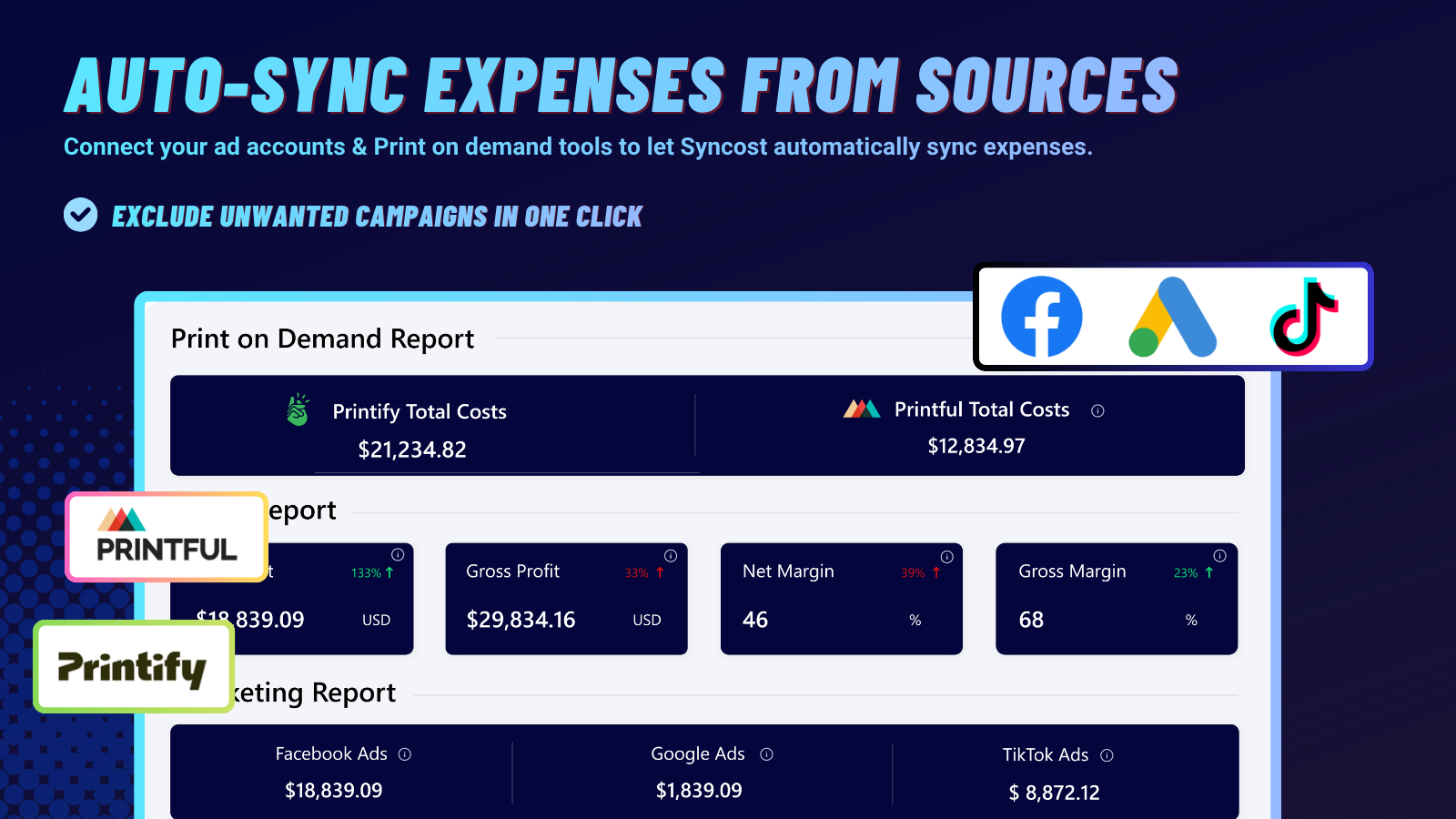
Syncost is engineered to bring absolute transparency to e-commerce transaction economics. By integrating directly with your Shopify backend and mapping every payout down to the individual order level, Syncost tracks your true net settled revenue in real time. It automatically surfaces unreturned processing fees from customer refunds, isolates multi-currency FX conversion premiums, and factors every transactional surcharge into a single, comprehensive bottom-up net profit dashboard. Stop guessing your true processing costs based on top-line estimates. Let Syncost deliver the verified, granular data you need to scale your store with complete financial certainty.