Cloud-Based Inventory Management Systems Compared (for Ecommerce Sellers)
Most inventory management comparisons are written for enterprises and recommend $349/month platforms to sellers who need $29 solutions. This one is different — seven cloud inventory systems scored on cost, Shopify integration quality, and ease of use for small ecommerce sellers, with a decision table that tells you exactly which one fits your current stage.
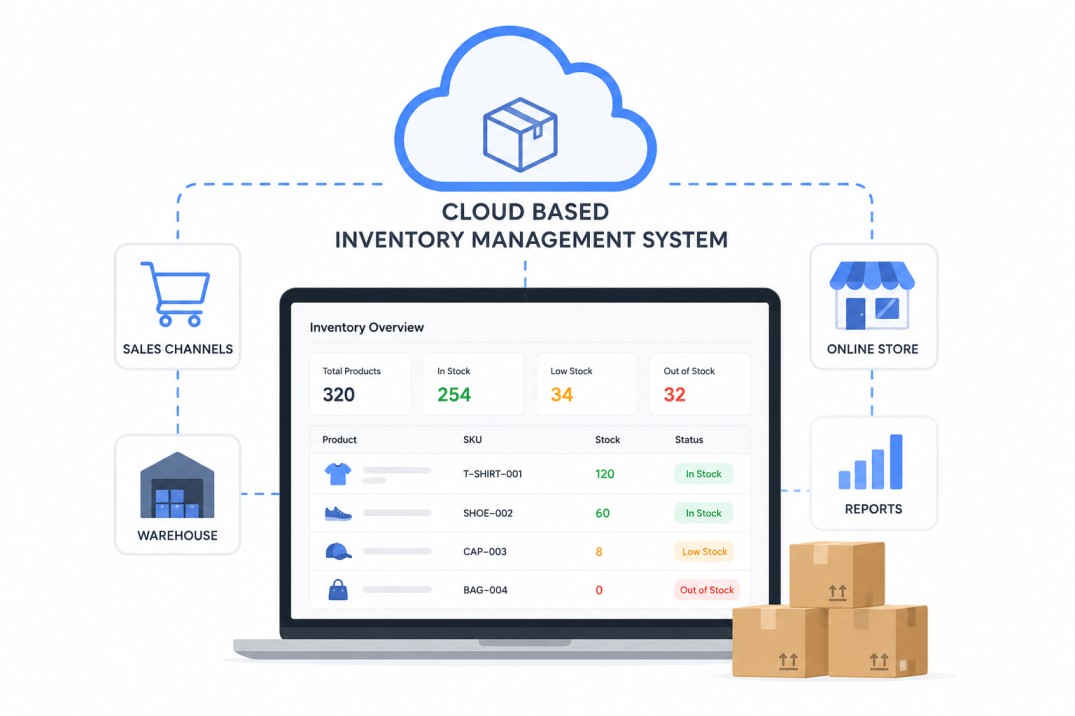
Most inventory management comparisons are written for enterprises. They rank platforms on warehouse automation, EDI connections, and multi-location pick-pack-ship workflows that a store doing 500 orders a month will never use. Then they recommend Cin7 at $349/month to someone who needs a $29 solution.
This comparison is for small ecommerce sellers — Shopify merchants running one to three sales channels, managing SKUs in the hundreds rather than thousands, and looking for a tool that solves real problems without a six-week implementation or an enterprise price tag. Every platform below is scored on three things: cost, Shopify integration quality, and how fast a non-technical merchant can actually use it.
What to Look for in a Cloud Inventory System
Before the comparison, a quick filter. Small Shopify sellers don't need every feature in a product brochure. They need these five:
Real-time Shopify sync. Stock levels must update instantly when a sale closes — on Shopify and on every other connected channel. A 30-minute sync delay is a 30-minute overselling window.
Multi-channel support. If you sell on Etsy, Amazon, or eBay alongside Shopify, inventory needs to pull from one shared pool, not separate counts that drift out of sync.
Low-stock alerts and reorder triggers. You shouldn't be discovering stockouts when a customer orders a product that isn't there. Alerts and automated purchase orders prevent that.
Ease of setup. A tool a solo operator can configure in an afternoon without a developer is worth more than a more powerful tool that needs an onboarding consultant.
Transparent pricing. Per-order or per-SKU fees that balloon with growth are a tax on success. Flat-rate or volume-tiered plans that scale predictably matter.
The Comparison: 7 Cloud Inventory Systems Scored
Each platform is scored out of 5 on cost (for small sellers), Shopify integration quality, and ease of use. The overall score is a simple average.
| Platform | Starting price | Cost score | Shopify integration | Ease of use | Overall |
|---|---|---|---|---|---|
| Zoho Inventory | Free / $29/mo | ⭐⭐⭐⭐⭐ | ⭐⭐⭐⭐ | ⭐⭐⭐⭐ | 4.3 |
| Veeqo | Free | ⭐⭐⭐⭐⭐ | ⭐⭐⭐⭐ | ⭐⭐⭐⭐ | 4.3 |
| Sumtracker | $59/mo | ⭐⭐⭐⭐ | ⭐⭐⭐⭐⭐ | ⭐⭐⭐⭐⭐ | 4.7 |
| Stock Sync | Free / $15/mo | ⭐⭐⭐⭐⭐ | ⭐⭐⭐⭐⭐ | ⭐⭐⭐⭐ | 4.7 |
| Ordoro | Free / $59/mo | ⭐⭐⭐⭐ | ⭐⭐⭐⭐ | ⭐⭐⭐⭐ | 4.0 |
| Trunk | $35/mo | ⭐⭐⭐⭐ | ⭐⭐⭐⭐ | ⭐⭐⭐⭐⭐ | 4.3 |
| Cin7 Core | $349/mo | ⭐⭐ | ⭐⭐⭐⭐⭐ | ⭐⭐⭐ | 3.3 |
Platform-by-Platform Breakdown
Zoho Inventory — Best Free Starting Point
Price: Free (50 orders/month, 1 warehouse) | Standard $29/month | Professional $79/month | Premium $129/month | Enterprise $249/month
Zoho Inventory is a cloud-based inventory and order management solution built for small to midsize businesses. The platform helps manage stock across multiple sales channels including Amazon and eBay, supports end-to-end order fulfillment, and offers automation tools for invoicing, shipping, and warehouse management.
The free tier is the most functional free plan available for small sellers — 50 orders a month, one warehouse, and two users is enough to validate whether the platform fits your workflow before committing. The Standard plan at $29/month is a strong value for early-stage sellers, scaling to $249/month on Enterprise.
The catch: Inventory updates are scheduled every 30 minutes on lower plans, which can increase the risk of overselling during peak traffic. If you're running flash sales or have tight stock on popular SKUs, this is a real operational risk.
Best for: Sellers under 200 orders/month who want a full-featured platform at low or zero cost, especially those already using Zoho Books for accounting (the integration is seamless).
Veeqo — Best Free Tool for Multichannel Sellers
Price: Free (unlimited orders, unlimited SKUs, unlimited users)
Amazon acquired Veeqo in 2021 and did something unusual: made the core product free. The free plan includes unlimited users, unlimited orders, unlimited shipping labels, unlimited products, and unlimited warehouses. The trade-off is the Fair Usage Policy requiring 50% of your labels to be purchased through Veeqo's pre-negotiated rates with UPS, USPS, FedEx, and DHL.
Inventory syncs across Amazon, eBay, Shopify, Walmart, WooCommerce, TikTok Shop, and Etsy. Veeqo Credits return up to 5% back on shipments. For multichannel sellers who ship significant volume through major carriers, the carrier discount can actually make Veeqo cost-negative — you save more on shipping than any paid alternative would cost.
The inventory management side is more basic than dedicated tools like Cin7 or Katana. It won't give you demand forecasting or complex purchase order automation, but for a seller who needs accurate stock counts across five channels at zero monthly cost, nothing comes close.
Best for: Multichannel sellers (especially Amazon + Shopify) who want free, reliable sync and are happy to use Veeqo's carrier rates for the majority of their shipments.
Sumtracker — Best Shopify-First Platform for Growing Sellers
Price: From $59/month (14-day free trial)
Sumtracker is recommended by the Shopify team for its simplicity and reliability, trusted by thousands of merchants to run day-to-day operations smoothly. It is built specifically to help growing ecommerce brands streamline inventory management without the complexity or cost of enterprise systems.
Sumtracker is one of the most cost-effective and reliable options for multichannel sellers in 2026. It's built for multichannel sellers and gives you real-time stock accuracy across stores and marketplaces without needing an ERP-level implementation. The Shopify integration is native and tight — stock syncs in real time, and the interface is clean enough that a solo operator can configure and run it without any technical background.
The $59/month entry price is higher than Zoho's Standard plan, but the Shopify-first design means less configuration time and fewer sync issues for Shopify-primary sellers.
Best for: Shopify sellers doing 100–1,000 orders/month who want reliable multichannel sync and a clean interface without enterprise complexity or cost.
Stock Sync — Best for Supplier-Fed Inventory
Price: Free plan available | Pro $15/month | Business $25/month
Stock Sync is a robust inventory app that goes beyond simple functions like real-time inventory syncing and low-stock alerts. If you already have inventory data stored within an Excel spreadsheet or Google Sheets, Stock Sync can automatically transfer and organize it.
Stock Sync does one thing and does it consistently: it keeps your Shopify inventory sync connections clean across every external source your data touches. Supplier CSV feeds, ERP systems, third-party APIs — if your stock numbers live in multiple places and need to stay accurate in Shopify, Stock Sync handles the reconciliation without you manually touching it.
The Pro and Business plans, differing by monthly volume, are fully automated and priced at $15 and $25 a month. At that price point, it's the most affordable automated inventory sync solution on this list for sellers whose primary problem is keeping Shopify stock counts accurate from supplier feeds.
Best for: Dropshippers and wholesale-fed retailers who receive stock feeds from external suppliers via CSV, FTP, or API and need reliable, automated Shopify sync.
Ordoro — Best for Sellers Who Want Inventory and Shipping Together
Price: Free plan (single channel) | $59/month for multichannel
Ordoro combines inventory management, shipping label printing, and dropshipping automation in one platform. It is designed for small to mid-size Shopify merchants who want to consolidate operational tools without paying enterprise prices. Built-in shipping label generation comes with discounted USPS rates, and dropshipping automation includes supplier-routing rules.
The free plan covers a single sales channel — useful for pure Shopify sellers who want shipping labels alongside basic inventory. The $59/month plan unlocks multichannel features. Multi-channel features are locked behind the higher-tier plan, and inventory forecasting and analytics are basic compared to dedicated tools.
Best for: Small Shopify sellers who want shipping label generation and basic inventory management in one tool, without paying separately for both.
Trunk — Best for Simple Multichannel SKU Linking
Price: From $35/month (sliding scale by order volume)
Trunk is known for integration with eBay, Etsy, Amazon, and Shopify, giving you peace of mind that, regardless of where your customers find your brand, the stock on hand is accurate. When you connect your various sales channels, Trunk will automatically group items with the same SKU, saving you time organising your catalog.
The Pro Plan offers full functionality on a sliding scale, from $35 for 100 orders a month to $329 for 10,000 orders a month. The SKU-linking feature is particularly valuable for sellers who list the same product across multiple channels under different listing IDs — Trunk maps them to a single inventory count automatically, preventing overselling without manual reconciliation.
Trunk is not a full inventory management platform — it doesn't do purchase orders, demand forecasting, or warehouse management. It does one thing exceptionally well: keeping multichannel stock counts accurate in real time.
Best for: Sellers on three or more channels (Shopify, Etsy, eBay, Amazon) who need reliable multichannel stock sync without the complexity of a full inventory platform.
Cin7 Core — For When You've Outgrown Everything Else
Price: Standard $349/month | Pro $599/month | Advanced $999/month
Cin7 connects your sales channels, warehouse operations, and supply chain into one system. Its ForesightAI demand planning reduced dead stock by 28% in case studies. Stock levels sync across all connected channels in near real time, and automated purchase orders trigger when inventory hits reorder points.
The downside: Cin7 starts at $349/month for 5 users, and implementation typically requires onboarding support. For a seller doing 500 orders a month on Shopify alone, this is significant overkill. For a seller doing 3,000 orders a month across Shopify, Amazon, wholesale, and a physical retail store, it's the right tool.
We include it here for completeness and as a clear north star: this is where the other platforms lead if you scale successfully. For businesses under 500 orders per month, Zoho Inventory's free tier or Ordoro at $59/month offer strong value at a fraction of Cin7's $349/month starting price.
Best for: Established multichannel brands at significant volume who need a single platform for inventory, orders, warehouse, and supply chain — not small sellers.
Which Platform Should You Choose?
| If you are… | Start with… |
|---|---|
| Under 50 orders/month, testing | Zoho Inventory (free) |
| Selling on Amazon + Shopify, cost-conscious | Veeqo (free) |
| Shopify-primary, 100–500 orders/month | Sumtracker ($59/mo) |
| Dropshipper with supplier CSV feeds | Stock Sync ($15–25/mo) |
| Want shipping labels + inventory in one tool | Ordoro (free–$59/mo) |
| Three+ channels, simple SKU linking | Trunk (from $35/mo) |
| 500+ orders, multichannel at scale | Cin7 Core ($349/mo) |
Inventory Cost Is Part of Your Profit Picture
Choosing the right inventory system reduces the two costs that silently drain ecommerce margin: stockouts (lost sales you never see) and overstock (working capital tied up in products that aren't moving). A $35/month inventory tool that prevents two stockouts a month on a $40 average order value has already paid for itself.
But inventory cost is one layer of your profit picture, not the whole thing. The subscription you pay your inventory system, the shipping fees per order, the Shopify processing fees, and the ad spend that drove each sale all contribute to what you actually keep. A store that tracks inventory accurately but doesn't track per-order net profit is seeing half the picture.
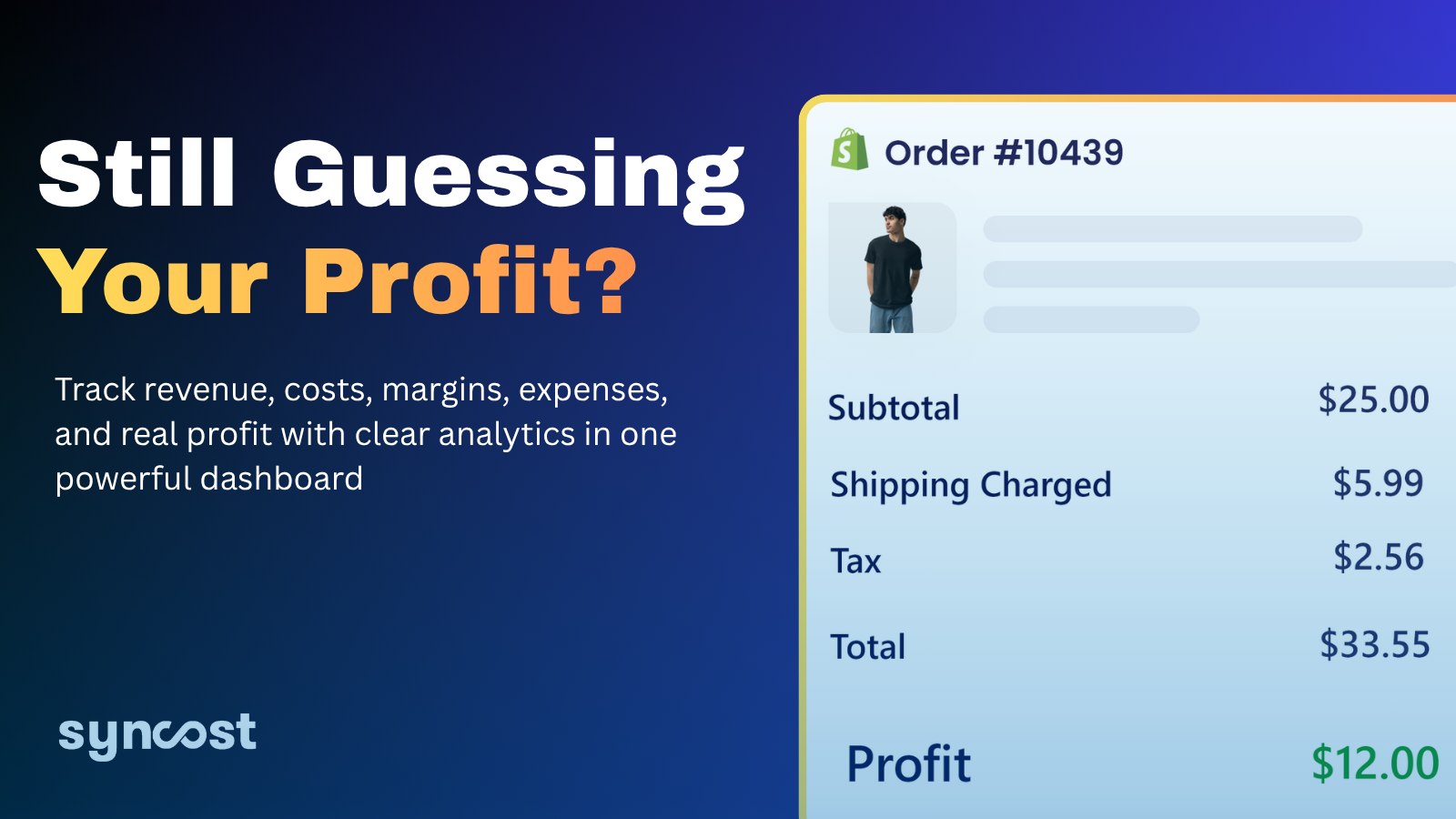
That's what Syncost adds for Shopify merchants. It pulls together your product costs, Shopify fees, shipping, and ad spend into a single view on every order — so you see the true net profit each sale generated, not just whether the stock count was right. Inventory systems tell you what you have. Syncost tells you what each sale of it actually earned. The two together give you the complete picture of where your business stands.
Pricing, plan features, and platform availability reflect publicly available 2026 information. Costs and features are subject to change. Verify current pricing directly with each platform before committing.