Revenue vs. Profit: Why Your Default Shopify Dashboard is Lying to You
Are your high Shopify sales translating to actual cash? Discover the hidden costs eating your margins and why relying on the default dashboard might be costing you your business.
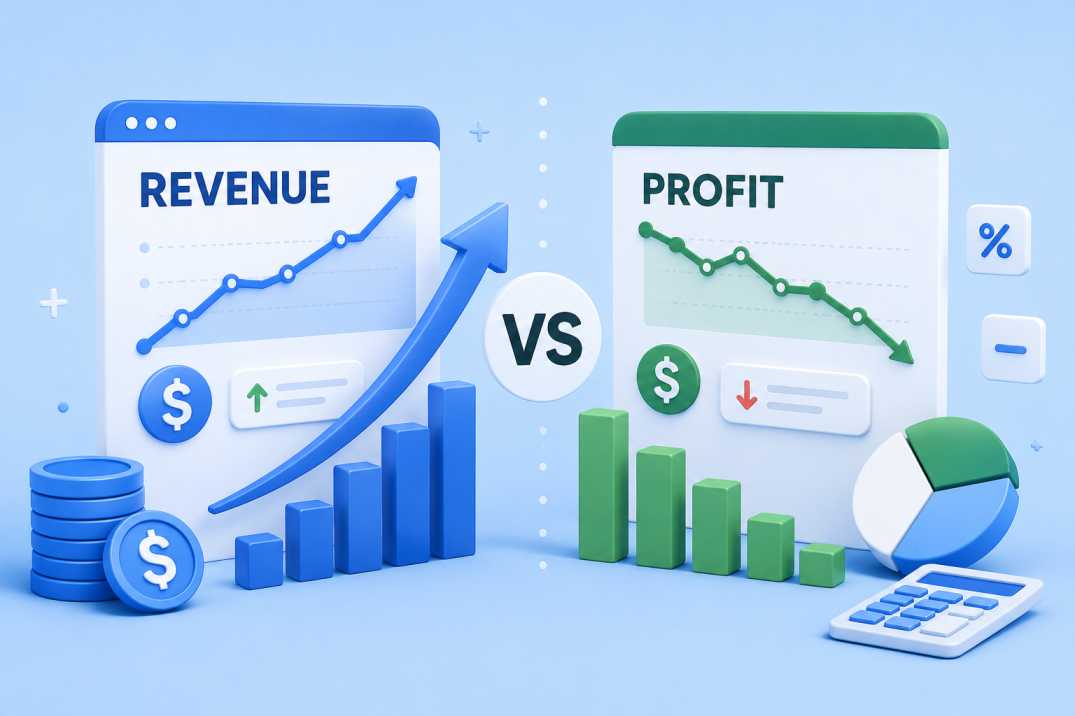
Let's cut right to the chase: looking at your Shopify homepage and seeing a massive "Total Sales" number feels great. But if you are running an e-commerce or print-on-demand store, that number is basically a vanity metric.
Your default Shopify dashboard is lying to you by omission. It tells you what came in, but it does a terrible job of telling you what is actually staying in your bank account. If you are relying on that single dashboard to make business decisions, you are flying blind and likely bleeding money.
Here is a breakdown of why your revenue metrics are deceiving, and how to track real profit on Shopify before your margins disappear entirely.
The Illusion of Gross Sales
When you make a $50 sale, Shopify celebrates. But let's strip away the reality of that transaction:
-
Cost of Goods Sold (COGS): If you are running a POD store, your base product and printing costs eat a massive chunk right away.
-
Payment Gateway Fees: Stripe, PayPal, or Shopify Payments take their cut immediately.
-
Ad Spend: How much did it cost in Facebook or TikTok ads to acquire that specific customer?
-
Shipping Variances: Did shipping cost slightly more than you charged the customer? You eat that difference.
Suddenly, that $50 "win" might actually be a $4 net profit—or worse, a loss.
The Print-on-Demand Cost Trap
This problem multiplies if you are running a print-on-demand model. Fulfillment costs from suppliers fluctuate. Shipping rates change. If you are not dynamically syncing these variable costs with your storefront, your profit margins are completely theoretical.
Many merchants try to manage this manually with messy spreadsheets. But when you are scaling, attempting to manually automate cost of goods sold on Shopify is a guaranteed way to make data entry errors. A desync between your live storefront data and your actual fulfillment costs will silently kill your business.
Stop Guessing, Start Tracking
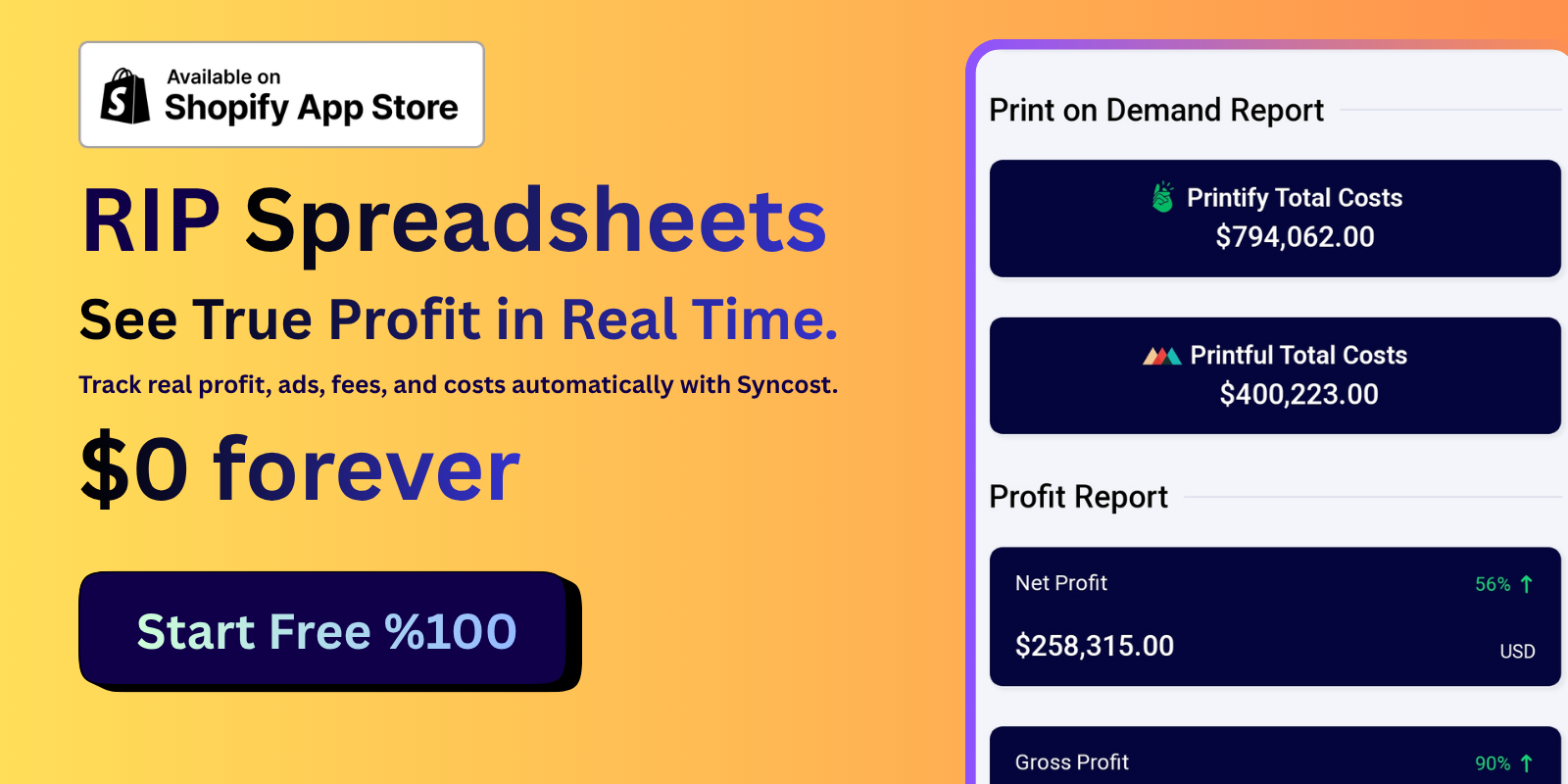
You cannot scale what you do not accurately measure. You need a centralized dashboard that automatically pulls your exact product costs, shipping fees, and gateway charges in real-time.
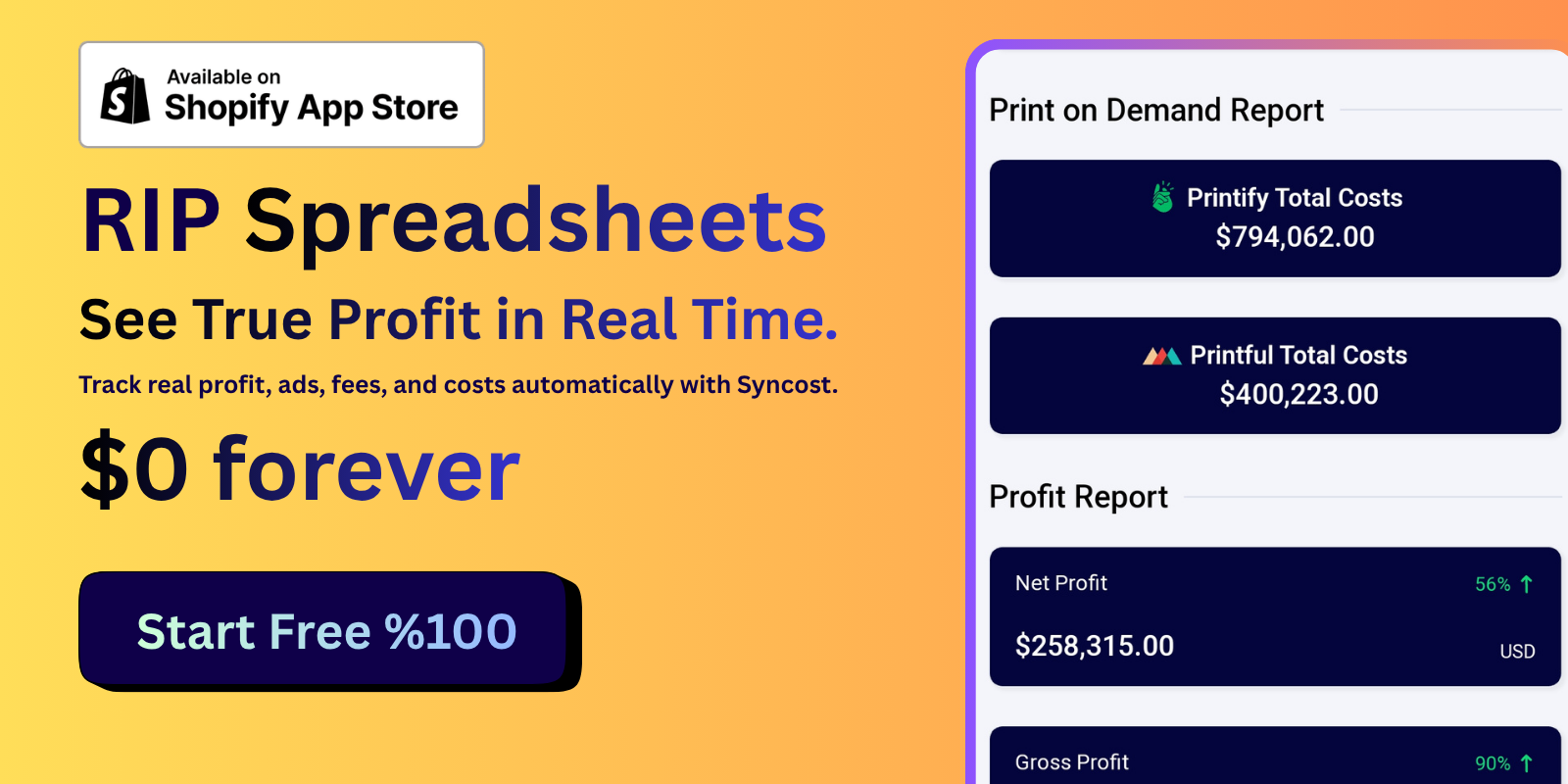
To survive in e-commerce today, you need to stop celebrating top-line revenue and start ruthlessly protecting your bottom line. By integrating a dedicated profit-tracking and cost-syncing app like Syncost into your store, you eliminate the guesswork. You get real-time, accurate data that tells you exactly which products are making you money and which ones are draining your budget.
Your business deserves the truth. Make sure your dashboard is actually telling it to you.