Return Item Chargeback: What It Means and How to Fight It
A return item chargeback doesn't just reverse a sale — it costs you the product, the outbound shipping, the return shipping, the platform fee, and the time to fight it. Here's what each one actually costs ($115.90 on a $55 order), the exact evidence that wins the dispute, and how to stop them happening in the first place.
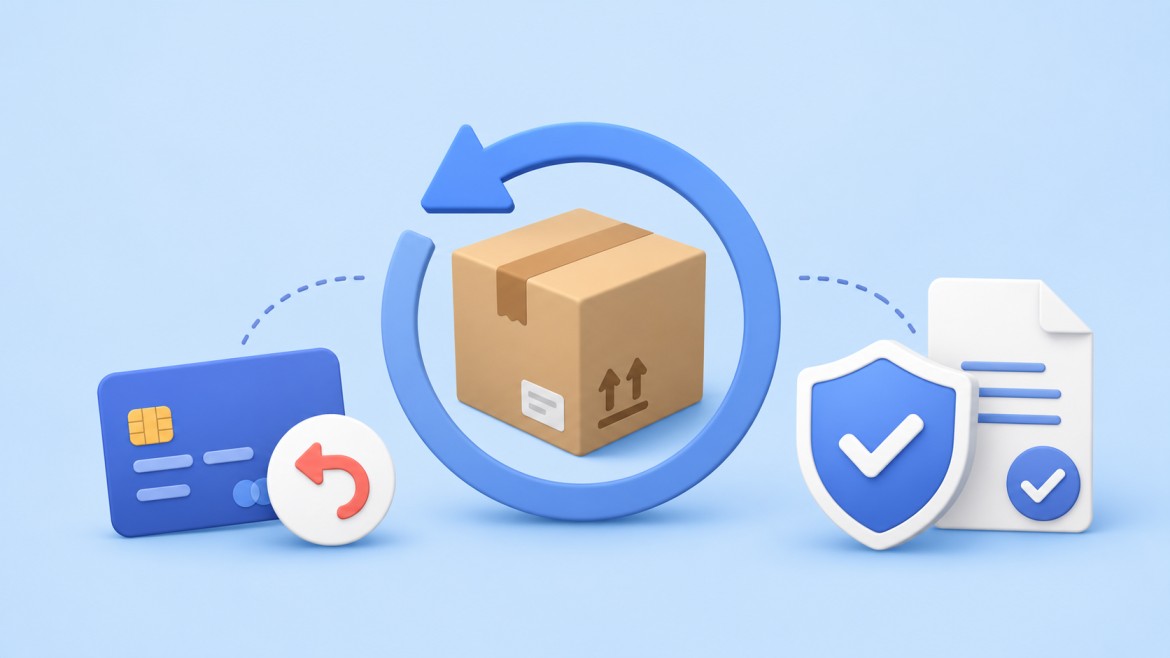
A return item chargeback is one of the most frustrating disputes a merchant can face — because it often means a customer got their refund twice. They returned the product (or claimed to), received a credit from their bank through the chargeback process, and potentially kept the item too. You lose the product, the revenue, and the chargeback fee, all on a transaction that was supposed to be a managed return.
This guide explains exactly what a return item chargeback is, why it happens, the specific evidence you need to dispute it successfully, and what one of these disputes actually costs your business when every line item is accounted for.
What Is a Return Item Chargeback?
A return item chargeback occurs when a customer initiates a bank dispute claiming they returned a product but did not receive a refund. Instead of contacting you directly to resolve the issue, they go to their card issuer, who then reverses the charge on their behalf.
The dispute is typically filed under one of two reason codes depending on the card network:
| Card network | Reason code | Description |
|---|---|---|
| Visa | 13.2 | Returned Merchandise |
| Mastercard | 4853 | Cardholder Dispute — Merchandise / Services |
| American Express | C04 | Returned Goods |
| Discover | RM | Return / Cancelled Merchandise |
Regardless of which code appears on your dispute notice, the core claim is the same: the customer says they returned the item and didn't get their money back.
Why This Chargeback Happens
Return item chargebacks fall into three categories, and knowing which one you're dealing with determines how you respond.
Legitimate disputes: The customer genuinely returned the item through your process, the return was received, but the refund was delayed, processed incorrectly, or applied to the wrong card. These are administrative errors on your side and should be resolved quickly without fighting the chargeback.
Miscommunication disputes: The customer believes they completed a return but your records show otherwise — a package dropped at a courier that never arrived, a return initiated but never shipped, or a return shipped outside your policy window that you declined. These are winnable with clear documentation.
Fraudulent disputes: The customer never returned the item, or returned a different item (wrong size, different product, damaged goods they claim are yours), then filed a chargeback claiming a refund was due. These are the most damaging and the most worth fighting.
The True Cost of a Return Item Chargeback
Before we get to the dispute process, let's establish why fighting these matters. A return item chargeback isn't just a reversed transaction — it's a multi-layer loss event that most merchants dramatically undercount.
Here's the full cost on a $55 order:
| Cost component | Amount | Notes |
|---|---|---|
| Revenue lost (chargeback reversal) | $55.00 | The disputed sale amount |
| Chargeback dispute fee (Shopify, US) | $15.00 | Charged at dispute initiation |
| Product cost (COGS) | $16.00 | Already manufactured or purchased |
| Original outbound shipping | $6.50 | Paid to deliver to the customer |
| Return shipping (if you provided label) | $6.50 | If your policy covers return postage |
| Payment processing fee (non-refunded) | $1.90 | 2.9% + 30¢, typically not returned |
| Time cost (dispute documentation) | $15.00 | Conservative 30 min at $30/hr rate |
| Total true cost | $115.90 | |
| Loss beyond the original sale | $60.90 | What the chargeback costs above the $55 |
A $55 sale that turns into a return item chargeback costs you $115.90. That's more than double the original order value — and it's why even "small" chargebacks are worth the time to dispute, and worth investing in prevention.
The double-refund scenario — where a customer gets a refund through a return AND wins the chargeback — pushes that loss even higher. You've refunded the sale twice: once through your returns process and once through the bank. The $55 order now costs you $170.90 in total outflows.
How to Fight a Return Item Chargeback
Disputing a return item chargeback successfully comes down to one thing: evidence that contradicts the customer's claim. The card network's arbitrator isn't familiar with your store or your policies — they're reading a document package and deciding whose story is better supported.
Here's what to compile before you submit your response.
Evidence That Wins Return Item Chargebacks
Your return policy — clearly stated and timestamped Include a screenshot of your return policy as it appeared on your website at the time of purchase, with the URL and date visible. If your policy requires items to be returned within 30 days, unopened, or in original packaging — and the customer's return didn't meet those terms — document that explicitly. Card networks give significant weight to a clear, published, accepted-at-checkout return policy.
Proof the customer agreed to your terms A screenshot of your checkout page showing the terms and conditions acceptance, the order confirmation email that references your return policy, or a policy acceptance timestamp from your platform. If the customer clicked "I agree to the terms" before purchasing, that's material evidence.
Return tracking — or the absence of it If the customer claims they returned the item, request the return tracking number. If they can provide one, check the carrier's records. If the tracking shows the package was delivered to a different address, returned after your policy window, or was never actually shipped, that's your case. If they cannot provide a tracking number, that absence is itself evidence — document it explicitly in your response.
Your refund records A screenshot of your refund transaction history from Shopify or your payment processor showing no refund was processed for this order — or conversely, showing a refund was already processed (making the chargeback a double-dip). Include the order ID, transaction ID, and date.
Delivery confirmation on the original order Carrier tracking showing the item was delivered successfully to the address on the order. This establishes that the original transaction was fulfilled correctly and that any return claim postdates a completed delivery.
Communication history Every email, chat, or message between you and the customer about the return. If they contacted you and you responded with return instructions, include the full thread. If they never contacted you before filing the chargeback — skipping your return process entirely — that gap in communication is worth highlighting. Card networks note when customers bypass the merchant's resolution process.
Photos of the returned item (if applicable) If you received a return but rejected it because the item was damaged, used, or a different product than what was sold, photograph the received package and item before any action is taken. These photos are your defence against the most egregious fraud scenario — the customer who returns garbage and then disputes the rejected return.
What to Include in Your Response Letter
Your dispute response isn't just a document dump — it's a brief, clear argument structured for someone who will read it in three minutes.
Open with a one-paragraph summary of your position: "We have no record of receiving a return from this customer, and our policy requires returns to be shipped with tracking within 30 days of delivery. The customer has not provided return tracking. The original order was delivered in full on [date], as confirmed by carrier tracking."
Then list your evidence in order of strength: delivery confirmation, your published return policy, the absence of return tracking, your refund records showing no prior refund, and the communication history.
Close with a specific ask: "We respectfully request that the chargeback be reversed on the basis that no valid return was received within our stated policy terms."
Keep it under two pages. Arbitrators process dozens of these — a concise, well-organised response outperforms a lengthy one.
Response Time Windows
You typically have 7–21 days from the chargeback notification to submit your evidence, depending on the card network. Missing this window forfeits your right to dispute entirely — the chargeback is automatically decided in the customer's favour.
Build a process: when a chargeback notice arrives, open it the same day, assess whether it's worth disputing (almost always yes on return item chargebacks, given the true cost), and begin pulling documentation immediately. Don't leave it for Friday.
When to Accept Rather Than Fight
Not every return item chargeback is worth disputing. Accept the loss and move on in these situations:
You made an error. If the refund genuinely wasn't processed, or was processed to the wrong card, or the customer's return was received and you failed to action it — fix the internal process, don't file a response.
The order value is very low. On a $12 order, the time cost of documentation often exceeds any recovery. Set a threshold — say $30 — below which you accept the loss, investigate the root cause, and move on.
Your documentation is weak. If you didn't collect tracking on the original shipment, have no signed terms at checkout, and have no return policy on your site, submitting a weak response can sometimes be held against you in subsequent disputes. Build your documentation infrastructure first.
How to Prevent Return Item Chargebacks
Prevention is cheaper than disputes at every order volume. Three changes reduce return item chargebacks significantly.
Make Your Return Policy Unavoidable
Display your return policy at checkout — not just in the footer — and require active acceptance (a checkbox, not passive scrolling). A customer who actively agreed to a 30-day return window with tracking required has much weaker standing to file a chargeback claiming they returned an item outside those terms.
Always Issue Return Labels With Tracking
If your policy covers return shipping, generate tracked return labels rather than asking customers to arrange their own. This eliminates the "I returned it but have no tracking" scenario entirely — either the label was used and you can see it, or it wasn't.
Process Refunds Immediately on Receipt
Most return item chargebacks from legitimate customers happen because the refund was slow. A customer who returns an item on Monday and sees no refund by Thursday files a dispute. Automate your refund trigger to the moment the return is marked received in your system, and send a confirmation email. Speed eliminates the impatience that drives most non-fraudulent return chargebacks.
Flag Repeat Dispute Filers
Some customers file chargebacks habitually. If a customer has already filed a dispute on a previous order, flag them in your system. Require signature confirmation on future orders, document every interaction, and consider whether to continue fulfilling orders to that customer at all.
What Return Item Chargebacks Really Cost Your Business
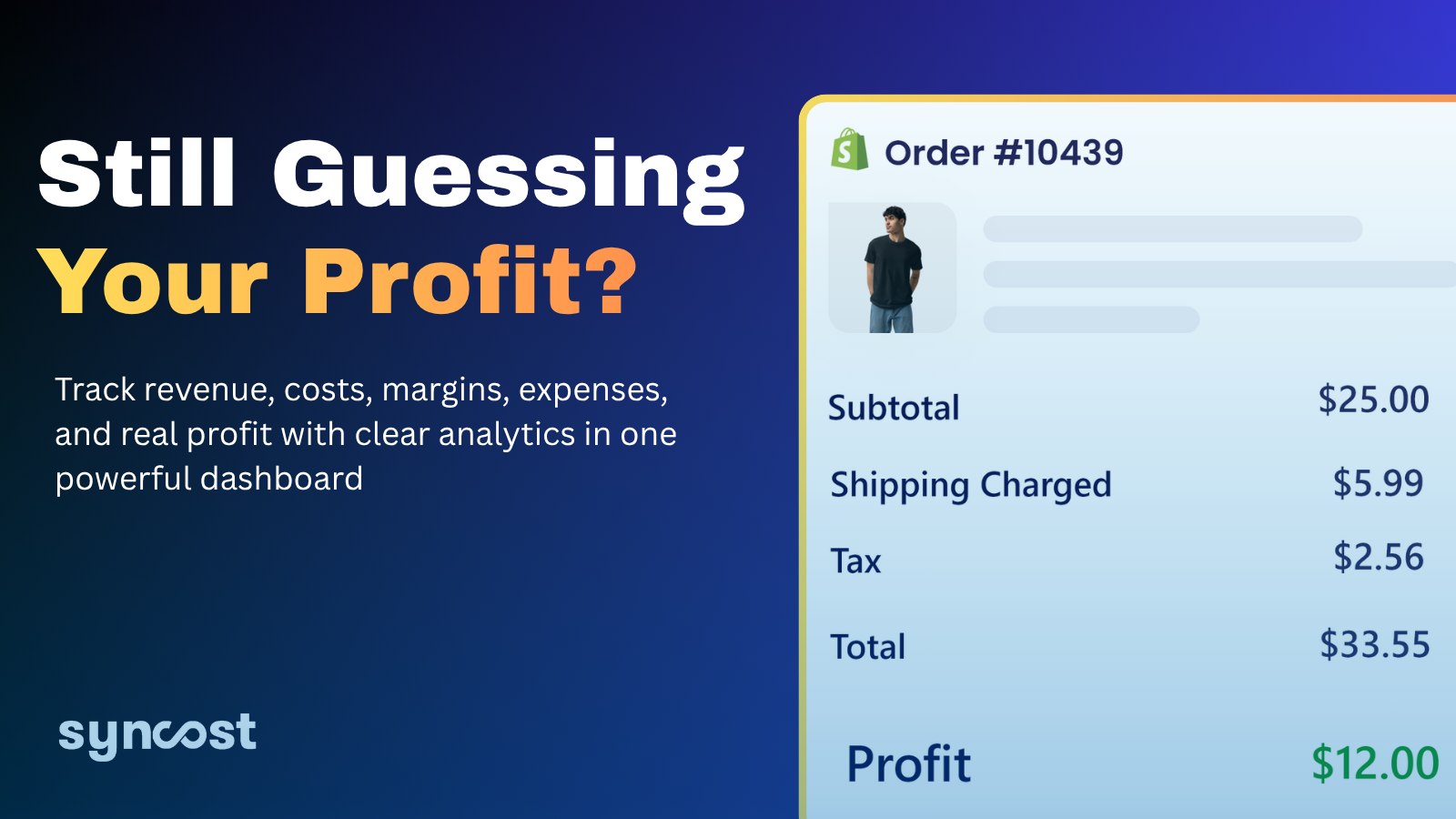
The $15 chargeback fee appears in your Shopify payout. The product cost was recorded when you bought inventory. The outbound shipping was paid through your carrier account. The documentation time came off your afternoon. None of these appear on the same screen — which means most merchants who track chargebacks only ever see the refunded revenue, not the full $115.90 impact of a single return item dispute.
That's the hidden profit leak Syncost closes for Shopify merchants. It automatically pulls together your product costs, shipping, Shopify fees, and operational data into one clear view — so every return item chargeback shows its real cost on your margin, not just the amount that cleared your bank statement. When you can see the true cost of every dispute, prevention stops being a vague best practice and becomes an obvious investment. Fight the chargebacks worth fighting, fix the process gaps causing the rest, and watch what happens to the margin line when both of those numbers improve.
Chargeback reason codes, fee amounts, and response windows reflect publicly available 2026 information and vary by card network, payment processor, and merchant agreement. Verify current terms with your payment provider before submitting dispute responses.