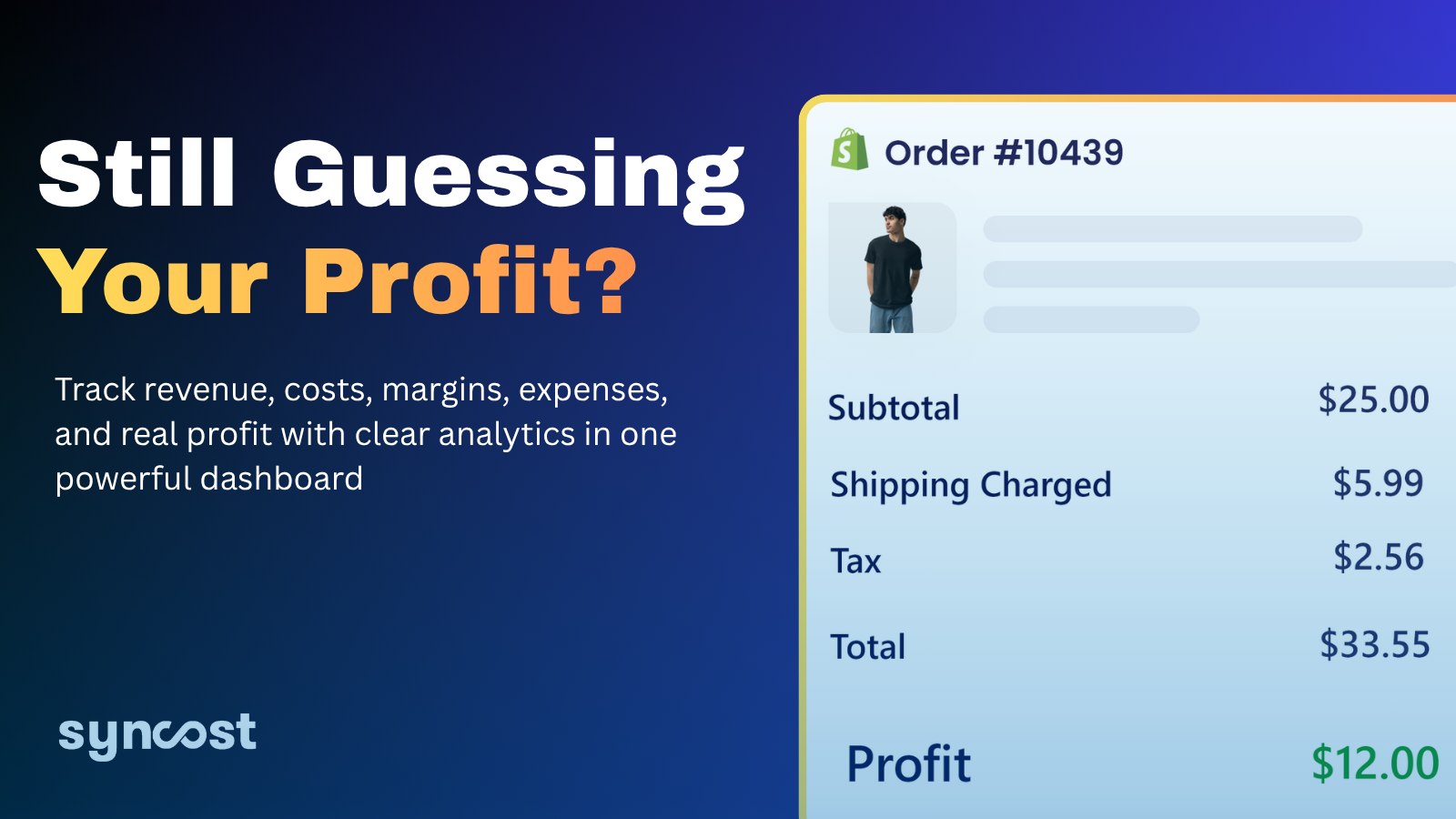
The Silent Margin Killer: Why Your Shopify "Gross Profit" Is A Mirage
Most merchants mistake high revenue for business health, ignoring the complex web of hidden operational costs eroding their actual take-home pay. If you aren't reconciling every expense—from transaction fees to returns—you are scaling toward an invisible bankruptcy.

The Hook & The Silent Problem: The Mirage of Top-Line Growth
Every morning, you check your Shopify dashboard. You see a green arrow, a rising revenue number, and a steady stream of orders. It feels like winning. However, many store owners are trapped in a dangerous cycle: they are growing their top-line revenue while simultaneously shrinking their net profit. The "silent killer" is the gap between the revenue you see on your dashboard and the actual cash that hits your bank account after all operating expenses—marketing, logistics, payment processing, and hidden tax leakages—are factored in. When you operate based on gross revenue, you aren't running a business; you are merely facilitating transactions for your suppliers and ad platforms.
Core Concept Explained: Defining Real Profitability
Net Profitability is the total revenue remaining after subtracting the Cost of Goods Sold (COGS), Customer Acquisition Costs (CAC), Shipping Fees, and all Operating Expenses. Unlike the simplified figures provided by default e-commerce platforms, true profit must account for every variable expense associated with the lifecycle of a single order.
The Deep-Dive Reference Guide: Where Your Money Actually Goes
| Expense Category | Impact on Margin | Tracking Frequency |
|---|---|---|
| COGS (Product + Landed) | High | Real-time |
| Payment Gateway Fees | Moderate | Per transaction |
| Returns & Restocking | High | Daily |
| Ad Spend (CAC) | Extreme | Daily |
| Platform Subscription | Low | Monthly |
| Marketing Software/Apps | Moderate | Monthly |
Technical Breakdown & Formulas: The Math of Sustainability
To understand your true financial standing, you must move beyond estimation. Use the following formula to calculate your True Net Profit per order:
Net Profit = (Gross Revenue - Discounts) - (COGS + Shipping + Ad Spend + Transaction Fees + Returns)
To determine your Profit Margin Percentage, apply this logic:
Net Margin % = (Net Profit / Gross Revenue) * 100
- Gross Revenue: The total value of sales before deductions.
- COGS: The total landed cost of the product, including shipping to your warehouse.
- Ad Spend (CAC): The total investment required to acquire that specific customer.
- Transaction Fees: The percentage and fixed costs charged by Shopify or your payment processor.
The Scaled Financial Impact: 100 vs. 5,000 Units
Consider a product selling for $50.00 with a total landed cost of $20.00.
At 100 Units:
- Revenue: $5,000
- Total Variable Costs (including ads/fees): $4,200
- Net Profit: $800 (16% Margin)
At 5,000 Units:
- Revenue: $250,000
- Total Variable Costs: $220,000
- Net Profit: $30,000 (12% Margin)
Notice the 4% margin decay. As you scale, ad fatigue and logistical inefficiencies often inflate costs. If you aren't tracking this in real-time, you might think you are making more money, but you are actually becoming less efficient as you grow. A 4% loss on $250,000 is $10,000 of pure profit leaked—money that should have stayed in your business but vanished into operational bloat.
Strategic Execution: Operational Workflows to Fix the Leak
- Standardize Landed Cost Accounting: Create a Google Sheet or database that tracks not just the factory cost, but also freight, duties, and packaging for every SKU.
- Reconcile Returns Daily: Never count a sale as final until the 30-day window passes. Subtract return-shipping and inspection costs immediately from the order’s ledger.
- Automate Expense Tracking: Manual spreadsheet entry is prone to human error. Integrate your store with a specialized analytics engine that pulls real-time data from your payment gateway and advertising accounts.
Frequently Asked Questions (FAQ)
Why does my bank balance never match my Shopify dashboard?
Shopify reports gross sales and may not include third-party app subscriptions, tax adjustments, or bank processing delays. The dashboard is a sales tracker, not a comprehensive balance sheet.
How often should I calculate my Net Profit?
At a minimum, weekly. If you are running high-spend ad campaigns, you should be reviewing your net profitability daily to ensure you aren't scaling an unprofitable product.
What is the biggest mistake in calculating CAC?
Ignoring the "blended" cost. Many owners only look at Facebook/Google ads but forget to include the costs of email marketing tools, influencer fees, or affiliate commissions in the total acquisition cost.
From Financial Chaos to Verified Profit
You cannot manage what you cannot measure accurately. Syncost was built for merchants who are tired of the guesswork. By automating the reconciliation of your Shopify data, Syncost provides a bird's-eye view of your true bottom line. Stop guessing your margins—let Syncost's automated engine calculate your net profit in real-time, providing you with the data needed to make high-stakes scaling decisions with absolute certainty.