Shopify Email Marketing: The Flows That Actually Drive Profit (2026)
A practical Shopify email marketing guide — the essential flows, tools, and tactics that turn subscribers into repeat, profitable customers (not just opens and clicks).

Shopify Email Marketing: The Flows That Actually Drive Profit
Email is the highest-margin channel a Shopify store owns — you're not renting attention from an ad platform, you're reaching people who already chose to hear from you. Done right, Shopify email marketing turns one-time buyers into repeat customers at almost no cost per send. This guide covers the flows, tools, and tactics that actually move revenue and profit.
Quick answer: Focus on automated flows first — welcome, abandoned cart, and post-purchase emails do most of the work. Use Shopify Email or an app like Klaviyo/Omnisend, build your list with a signup incentive, and measure revenue per email, not just opens.
Why email marketing matters for Shopify stores
- You own the channel — no algorithm changes or rising ad costs.
- High ROI — email consistently returns more per dollar than most paid channels.
- Drives repeat purchases — far cheaper than acquiring new customers.
- Automated — set up flows once and they earn while you sleep.
The essential email flows (set these up first)
Automations ("flows") run on autopilot and drive the majority of email revenue:
| Flow | Trigger | Goal |
|---|---|---|
| Welcome series | New subscriber | Introduce the brand, deliver the signup offer, first purchase |
| Abandoned cart | Cart left behind | Recover the sale (biggest quick win) |
| Abandoned checkout | Checkout started, not finished | Close near-buyers |
| Post-purchase | Order placed | Thank, set expectations, cross-sell |
| Win-back | Lapsed customer | Re-engage buyers who've gone quiet |
| Browse abandonment | Viewed products, no cart | Nudge interested visitors |
Start with welcome + abandoned cart + post-purchase — they deliver the fastest returns.
Choosing an email tool
- Shopify Email — built into Shopify, simple, cost-effective for basic campaigns and flows. Great starting point.
- Klaviyo — powerful segmentation and automation; the go-to for growing stores.
- Omnisend — strong automation with email + SMS, beginner-friendly.
Start simple. Move to a more advanced tool when segmentation and automation become your growth levers.
Building your email list
- Signup incentive — offer a discount or freebie for subscribing (factor the discount into your margin).
- Popups and embedded forms — capture visitors before they leave.
- Checkout opt-in — let buyers subscribe during purchase.
- Never buy lists — it wrecks deliverability and trust.
Campaign tactics that convert
- Segment your list — send relevant emails (new subscribers vs repeat buyers vs lapsed).
- Strong subject lines — the single biggest driver of opens.
- One clear call to action per email.
- Mobile-first design — most emails are read on phones.
- Send consistently — a predictable rhythm beats sporadic blasts.
Measure profit, not just opens
Opens and clicks feel good, but they don't pay the bills. The metric that matters is revenue (and profit) per email — and whether the discounts you send to drive those sales still leave you a margin.
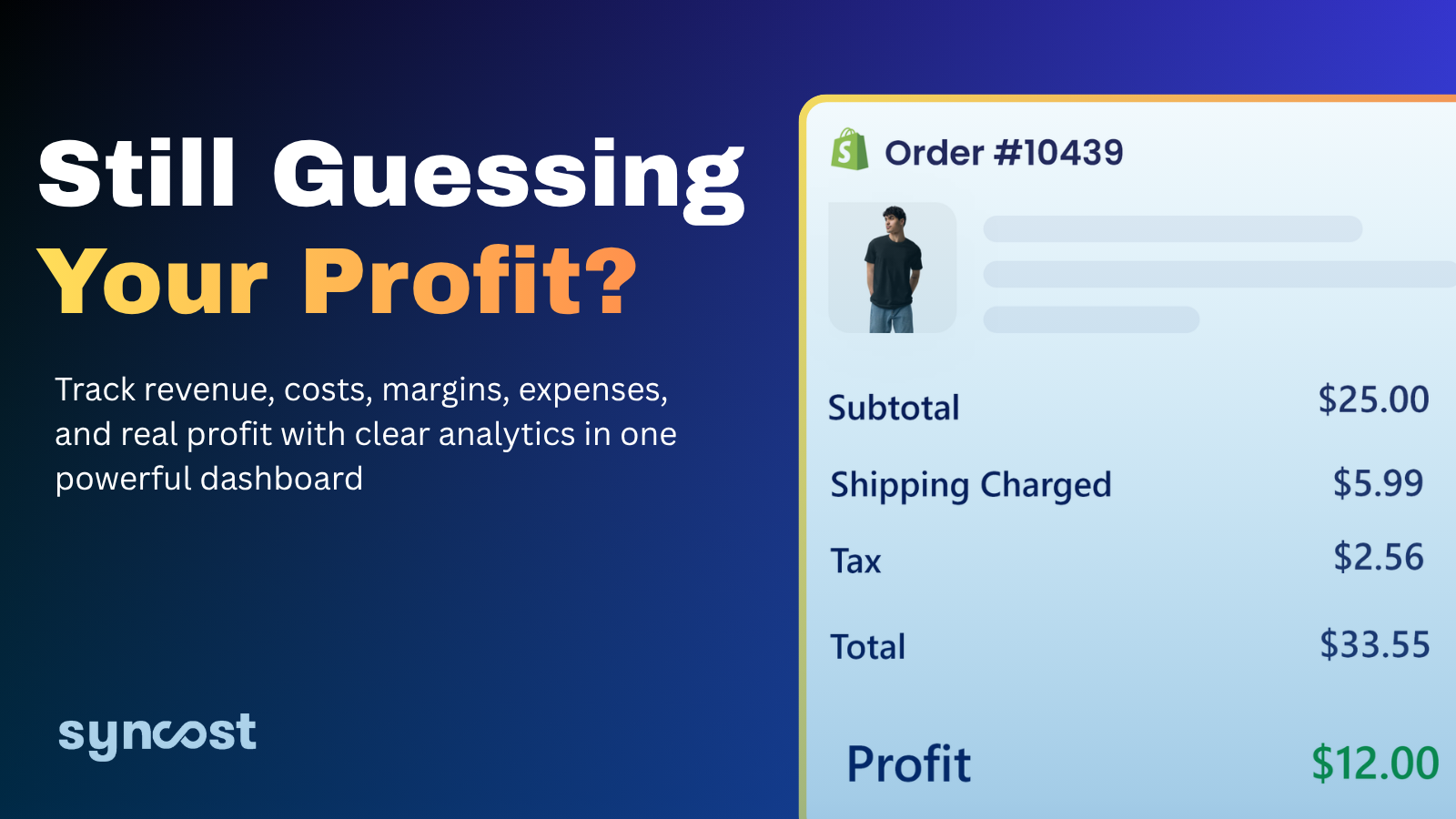
A discount-heavy email campaign can "win" on revenue while quietly losing money once product cost, fees, and shipping are counted. Syncost shows your true net profit — so you can see which campaigns and offers actually made money, and set email discounts that boost sales without erasing your margin.
Try Syncost free and turn email revenue into tracked profit.
FAQ
Does Shopify have built-in email marketing? Yes — Shopify Email lets you send campaigns and set up basic automations from your admin. It's a solid starting point before upgrading to a dedicated app.
What's the best email marketing app for Shopify? Shopify Email for simplicity, Klaviyo for advanced segmentation and automation, and Omnisend for email + SMS. Choose based on how advanced your automation needs are.
Which email flow makes the most money? The abandoned cart flow is usually the highest-earning, followed by the welcome series and post-purchase emails.
How often should I email my Shopify customers? Consistency matters more than frequency. A regular cadence (e.g., weekly) plus automated flows works well — watch unsubscribe rates and adjust.
Do email discounts hurt my profit? They can. A discount to drive email sales still has to leave a margin after product cost, fees, and shipping — track net profit per campaign to be sure.