How to Set Up a Shopify Store: Step-by-Step Guide for Beginners (2026)
A beginner's step-by-step guide to setting up a Shopify store — from sign-up and products to payments, shipping, and launch — plus the real costs to plan for.

How to Set Up a Shopify Store (Step-by-Step for Beginners)
Setting up a Shopify store is easier than most people expect — you can have a working store in an afternoon. The harder part is doing it right so you're ready to sell and actually make a profit. This guide walks you through every step, from sign-up to launch, plus the real costs to plan for.
Quick answer: To set up a Shopify store: (1) sign up for a plan, (2) add your products, (3) pick and customize a theme, (4) set up payments, (5) configure shipping and taxes, (6) add key pages and a domain, then (7) launch. Budget for your plan, apps, domain, and product costs before you start.
Step 1: Sign up for Shopify
Go to shopify.com and start a free trial. You'll pick a store name (you can change the display name later) and get a yourstore.myshopify.com URL. Choose a plan after the trial based on your needs — most new stores start on the Basic plan.
Step 2: Add your products
In Products → Add product, enter for each item:
- Title and description (unique, benefit-led — good for SEO and conversions)
- Images (clear, well-lit, consistent)
- Price — and importantly, the cost per item (this powers your profit tracking later)
- Inventory, SKU, and variants (size, color, etc.)
- Shipping details (weight for accurate rates)
Tip: fill in the "cost per item" field for every product. It's the foundation of knowing your real margins.
Step 3: Choose and customize a theme
Go to Online Store → Themes. Start with a free theme (Dawn is a great default), then customize:
- Add your logo and brand colors
- Set up your homepage sections (featured products, collections, testimonials)
- Build your navigation menu
Keep it clean and fast — a lighter theme converts better.
Step 4: Set up payments
In Settings → Payments, activate Shopify Payments (or a third-party gateway). This lets you accept credit cards. Using Shopify Payments also avoids Shopify's extra transaction fee that applies with third-party gateways.
Step 5: Configure shipping and taxes
- Shipping (Settings → Shipping and delivery): set your rates — flat rate, free shipping, or carrier-calculated. Make sure rates cover your real costs.
- Taxes (Settings → Taxes and duties): configure sales tax collection based on where you have tax obligations.
Both directly affect your margin, so set them deliberately.
Step 6: Add essential pages and a domain
- Pages: About, Contact, Shipping Policy, Refund Policy, Privacy Policy (Shopify can generate policy templates).
- Domain: buy a custom domain (Settings → Domains) or connect one you own. A branded domain builds trust.
Step 7: Test and launch
Before going live:
- Place a test order to check the full checkout flow.
- Confirm emails, taxes, and shipping calculate correctly.
- Remove the storefront password (Online Store → Preferences) to go public.
Congratulations — your store is live.
What it really costs to run a Shopify store
Plan for these ongoing costs so you price for profit from day one:
- Shopify plan (monthly subscription)
- Apps (email, reviews, upsells — they add up)
- Payment/transaction fees on every sale
- Domain (annual)
- Product costs and shipping
- Ad spend (if you run paid traffic)
The step new sellers skip: knowing your real profit
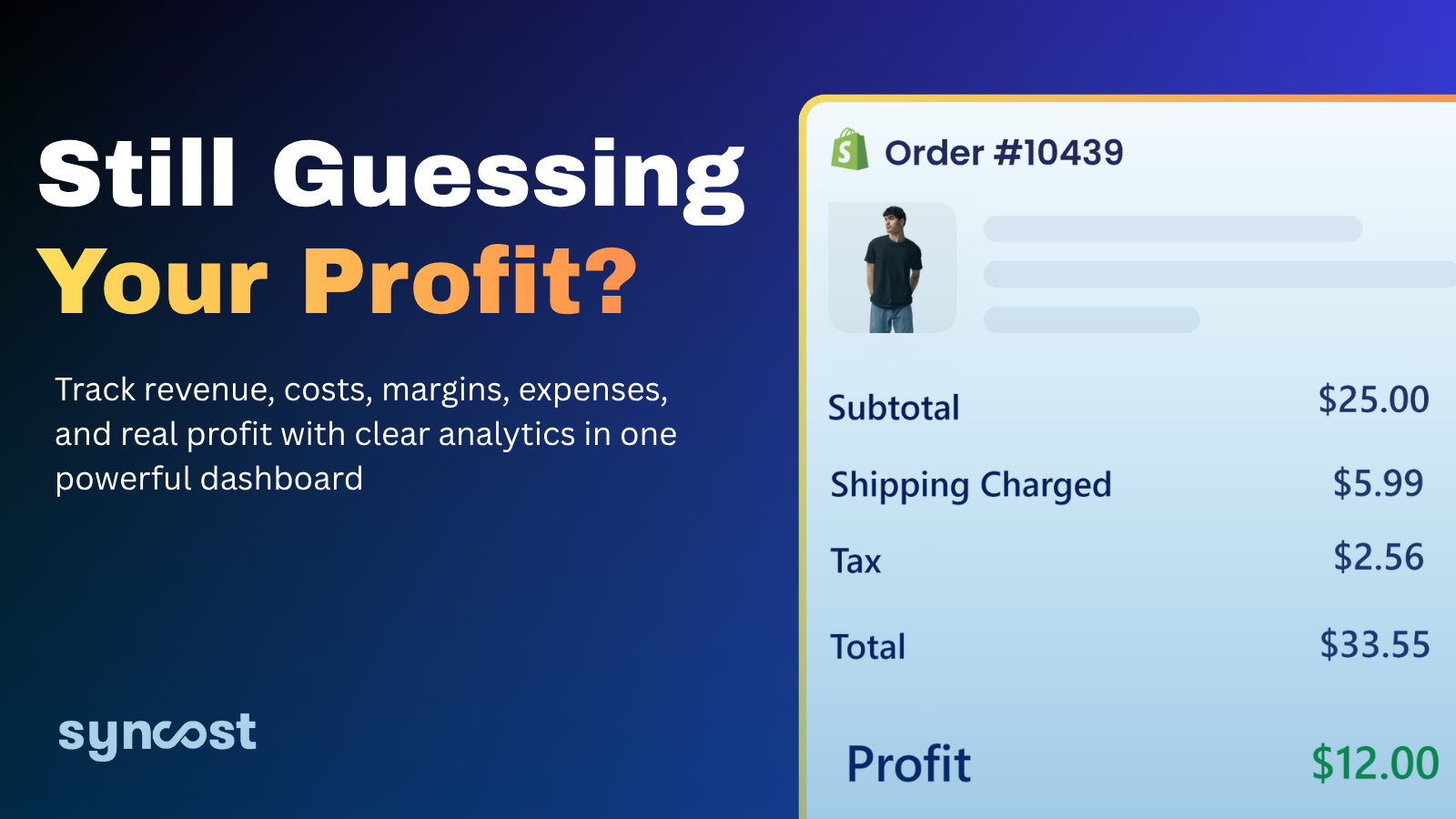
Most new store owners track revenue and celebrate sales — then wonder why the bank balance doesn't grow. The gap is costs: product cost, fees, shipping, and ads quietly eat into every order.
Syncost connects to your new store and shows true net profit — after all those costs — in real time. Set it up early and you'll always know whether you're actually making money, not just making sales.
Try Syncost free and start your store knowing your real numbers.
FAQ
How much does it cost to set up a Shopify store? Beyond the monthly plan, budget for a domain, apps, payment fees, and product costs. Many stores launch for a modest monthly total, but costs grow with apps and ad spend.
How long does it take to set up a Shopify store? A basic store can be live in a day. Adding products, refining design, and setting up policies and shipping properly takes longer — plan a few days to do it well.
Do I need coding skills to set up Shopify? No. Shopify's themes and settings are no-code. You can build and customize a full store without touching code.
What should I do first after setting up my store? Place a test order, confirm shipping and taxes calculate correctly, fill in each product's cost, and set up profit tracking so you know your margins from your first sale.