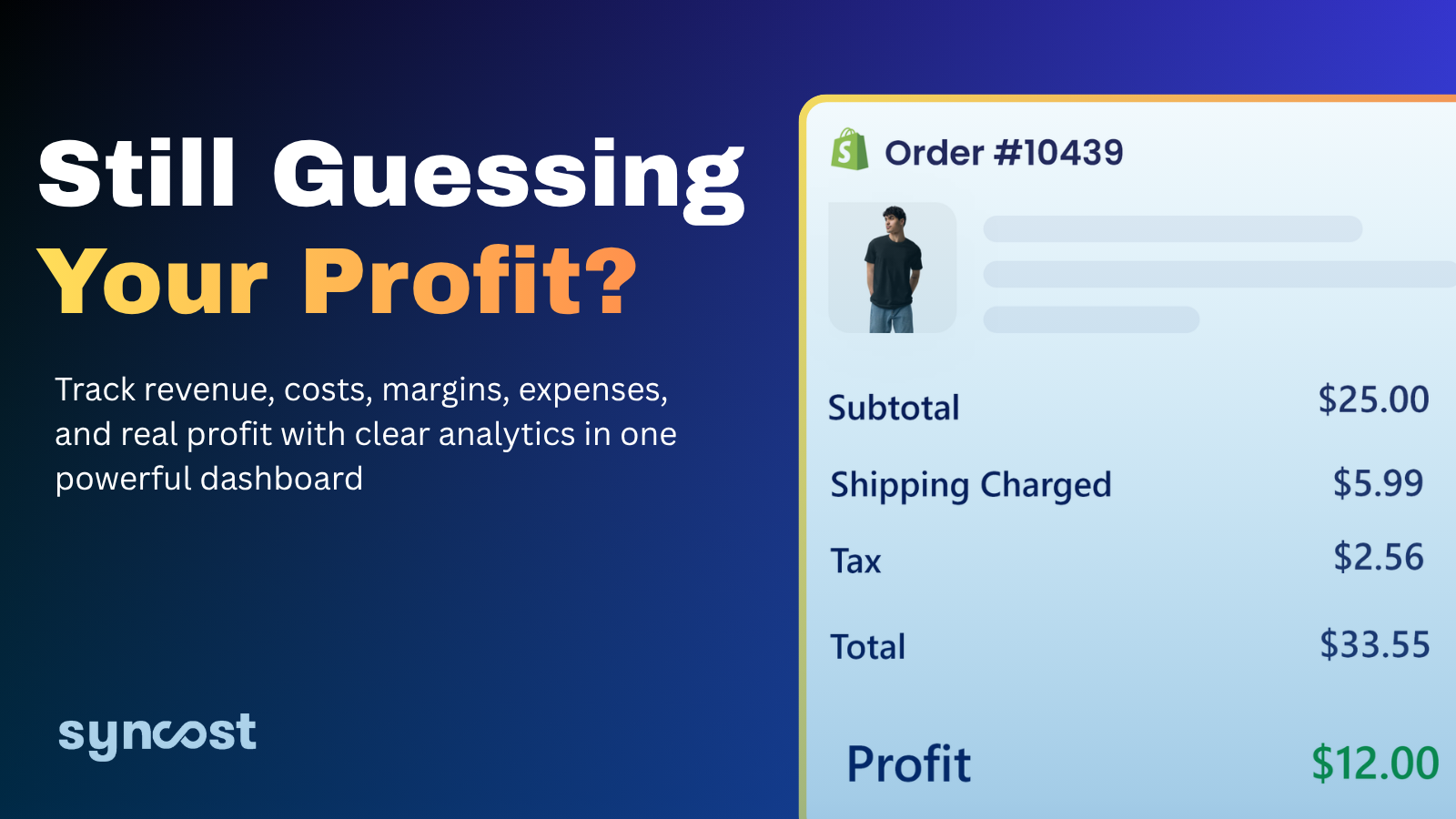
The Free Shipping Threshold Trap: How Uncalculated Freight Subsidies Vaporize E-Commerce Margins
Offering "Free Shipping Over $50" might boost your checkout conversion rate, but uncalculated dimensional weight fees and zonal freight surcharges are secretly wiping out your net margins. Learn the exact CFO formulas to set a profitable shipping threshold before your freight bill swallows your operating cash.

The Hook & The Silent Problem
There is a ubiquitous marketing tactic in direct-to-consumer (DTC) e-commerce that feels like an absolute non-negotiable: offering free shipping.
Every conversion rate optimization (CRO) blog and agency playbook preaches the same gospel: buyers hate shipping fees at checkout. Cart abandonment rates hover around 70%, and the single biggest trigger is an unexpected $8.50 shipping charge added on the payment step. So, like tens of thousands of Shopify merchants before you, you add a top-of-page banner announcing "FREE SHIPPING ON ORDERS OVER $50."
Immediately, your cart abandonment drops. Your conversion rate ticks up by 15%. Your Average Order Value (AOV) edges upward as customers add a minor $10 accessory just to clear the $50 hurdle and avoid the "dreaded" shipping fee. Your marketing team celebrates a successful campaign.
Then, thirty days later, your monthly logistics statement arrives from your 3PL or shipping carrier (FedEx, UPS, or DHL), and your jaw drops.
Your outbound shipping expense didn't just scale linearly with your order volume—it exploded exponentially. You realize that to fulfill those $52 and $55 orders for free, you spent an average of $11.80 per package in regional carrier zone surcharges, fuel multipliers, and dimensional weight penalties. Instead of making money on those incremental items added to carts, you actually paid your customers to take them out of your warehouse.
This is the Free Shipping Threshold Trap. By treating outbound freight as a static, flat marketing expense rather than a dynamic, weight-and-distance-sensitive variable cost, you are running a margin-subsidization program that quietly turns profitable customer transactions into net profit losses.
Core Concept Explained (The Quick Answer)
The Optimal Free Shipping Threshold (OFST) is the precise cart value dollar amount at which the gross profit generated by incremental items added to a cart exceeds the total outbound freight, dimensional weight surcharges, and fulfillment costs of shipping the package. Setting a threshold based on arbitrary competitor benchmarks without calculating your Freight-Subsidized Margin (FSM) guarantees that low-tier qualifying carts will bleed liquid operating cash.
The Deep-Dive Reference Guide
To eliminate uncalculated freight subsidies, you must evaluate your shipping strategy through a CFO-level financial lens. Contrast your current operational assumptions against carrier reality in this matrix:
| Freight Allocation Variable | The Amateur Assumption (The Trap) | The CFO Reality (True Freight Impact) |
|---|---|---|
| Outbound Carrier Costs | "Shipping costs an average of $6.00 per package nationwide." | Carrier costs vary wildly based on Distance Zones (Zones 1–8), fuel surcharges, and delivery area fees. |
| Package Weight Dynamics | "The item weighs 1.2 lbs, so it ships under the 2 lb rate tier." | Carriers bill on Dimensional Weight (DIM Weight) if the box volume exceeds actual mass, doubling shipping fees for light, bulky items. |
| Threshold AOV Impact | "A $50 threshold forces buyers to spend more, boosting net profit." | If the customer adds a low-margin item to reach $50, the extra weight can trigger a higher freight tier, destroying net contribution. |
| Cart Contribution Margin | "Gross profit margin is 60%, so any order over $50 is safe." | Gross margin ignores ad CAC, 3PL pick/pack labor, gateway fees, and freight. True contribution margin on low cart values is often under 10%. |
Technical Breakdown & Formulas
You cannot afford to guess where to set your free shipping bar. You must use precise logistical and financial formulas to calculate your mathematical break-even threshold.
[Formula 1: True Outbound Freight Cost (TOFC)]
TOFC = Max(Actual_Scale_Weight, Dimensional_Weight) * Base_Zone_Rate
     + Fuel_Surcharge_$
     + Residential_Delivery_Fee
     + 3PL_Outbound_Pick_Pack_Fee

Where:
Dimensional_Weight = (Length_Inches * Width_Inches * Height_Inches) / Carrier_DIM_Divisor

[Formula 2: Net Cart Contribution Margin After Freight (NCCM)]
NCCM_$ = Cart_Retail_Price
       - Landed_COGS_of_Cart
       - Blended_Ad_CAC
       - Gateway_Fees
       - TOFC_$

[Formula 3: Optimal Free Shipping Threshold (OFST)]
OFST_$ = Baseline_AOV + ((Average_TOFC_$ - Customer_Shipping_Revenue_At_Baseline) / Store_Gross_Margin_%)
Carrier DIM Divisor: Standard domestic carriers typically use a DIM divisor of 139 (or 166 for specific commercial accounts). If your product is housed in a 10" x 10" x 10" box, its dimensional weight is (1000 / 139) = 7.19 lbs. Even if the product inside weighs only 1 lb, you will be billed at the 8 lb shipping rate. Optimal Free Shipping Threshold (OFST): This formula calculates the exact retail value your cart must reach so that the additional gross profit dollars generated by the cart bump completely absorb the net cost of providing free shipping.
The Scaled Financial Impact (What It Actually Costs You)
Let’s walk through a granular mathematical example demonstrating how setting an arbitrary $50 free shipping threshold incinerates cash flow at scale.
Assume you sell home decor accessories:
- Item A (Core Product): Retails for $42.00. Landed COGS is $12.00.
- Item B (Cart Filler): Retails for $10.00. Landed COGS is $4.00.
- Average Ad CAC per Order: $15.00
- 3PL Pick/Pack & Gateway Fees per Order: $4.50
Scenario 1: Customer Buys Item A Alone ($42.00 Cart)
The customer does not meet your $50 free shipping threshold. They pay a $7.00 flat shipping fee at checkout.
- Cart Retail Revenue: $42.00 + $7.00 Shipping = $49.00
- Landed COGS: $12.00
- Actual Freight Cost to Ship (Zone 5, 2 lbs): $8.50
- 3PL Pick/Pack & Gateway Fees: $4.50
- Ad CAC: $15.00
- True Net Profit: $49.00 - ($12.00 + $8.50 + $4.50 + $15.00) = +$9.00 (A healthy 21.4% net margin).
Scenario 2: Customer Adds Item B to Hit Your "Free Shipping Over $50" Threshold ($52.00 Cart)
To avoid the $7.00 shipping fee, the customer adds Item B ($10.00). The total cart hits $52.00, unlocking free shipping. You absorb 100% of the freight cost.
Because Item B adds physical size and weight, the box size increases, pushing the package into a higher dimensional weight bracket and increasing carrier costs from $8.50 to $12.00.
- Cart Retail Revenue: $52.00 (Zero shipping collected)
- Landed COGS (Item A + Item B): $12.00 + $4.00 = $16.00
- Actual Freight Cost to Ship (Higher DIM Weight): $12.00
- 3PL Pick/Pack (Extra Item Pick Fee) & Gateway Fees: $5.20
- Ad CAC: $15.00
- True Net Profit: $52.00 - ($16.00 + $12.00 + $5.20 + $15.00) = +$3.80
The Scaled Financial Reality
Look at what just happened: The customer spent $10.00 more in your store, but your net cash profit dropped from $9.00 down to $3.80! You lost $5.20 in net profit by forcing a sale over an uncalculated shipping threshold.
At 100 Orders per Month:
- Scenario 1 Net Profit: $900.00
- Scenario 2 Net Profit: $380.00 (You lose $520.00 in cash).
At 5,000 Orders per Month:
- Scenario 1 Net Profit: $45,000.00
- Scenario 2 Net Profit: $19,000.00
- Total Liquid Capital Destroyed: -$26,000.00 per month.
The Financial Impact: By setting an uncalculated free shipping threshold, you paid for the customer to add low-margin items to their cart. You doubled your warehouse labor, increased your inventory velocity demands, and handed $26,000 a month directly to freight carriers.
Strategic Execution (How to Apply This to Your Business)
To stop letting uncalculated freight subsidies destroy your bottom line, execute this operational re-engineering process immediately:
-
Audit Your Regional Freight and DIM Weight Matrix: Uncover your real logistics costs. Pull your carrier invoices from the last 90 days. Export your average shipping cost per order broken down by shipping zones (Zones 1 through 8) and box sizes. Identify the exact package size thresholds where dimensional weight penalties trigger massive price spikes.
-
Calculate Your Mathematical Free Shipping Threshold: Stop guessing your threshold. Run the Optimal Free Shipping Threshold (OFST) formula using your store's true gross margin percentage, average CAC, and actual regional freight costs. If your baseline AOV is $45, your free shipping threshold should typically sit 15% to 25% above your AOV (e.g., $65 to $75), ensuring the gross profit on added items comfortably absorbs the freight subsidy.
-
Exclude Heavy or Bulky SKUs from Free Shipping: Protect low-margin carts. Do not allow heavy, low-margin products to qualify for sitewide free shipping thresholds. Add product-level shipping rules on Shopify to flag oversized items, forcing a dynamic freight surcharge at checkout regardless of total cart value.
-
Enforce Custom Packaging SLA Rules with Your 3PL: Optimize box sizes at the warehouse. Ensure your 3PL is not packing small items into oversized boxes simply because they ran out of standard mailers. Every extra inch of air inside a shipping box increases dimensional weight, directly inflating your free shipping bill.
Frequently Asked Questions (FAQ)
How do I determine if my free shipping threshold is set too low?
If your average order value (AOV) sits within $5 of your free shipping threshold, your threshold is set too low. A threshold's goal is to stretch cart sizes. If customers easily hit the threshold without adding higher-margin items, you are absorbing outbound freight costs without receiving any meaningful uplift in AOV to compensate for the subsidy.
What is Dimensional Weight (DIM Weight) and how does it affect free shipping?
Dimensional weight is a pricing technique used by commercial freight carriers (FedEx, UPS, DHL, USPS) that calculates shipping costs based on a package's volumetric size rather than its physical weight on a scale. If you ship lightweight, bulky products (like pillows, jackets, or plastic organizers), carrier DIM weight calculations will charge you for a 10 lb package even if the physical box weighs 2 lbs, destroying your net margins if shipping is free.
Should I offer sitewide free shipping with no minimum spend?
Offering sitewide free shipping with no minimum spend is extremely dangerous unless your product margins are extraordinarily high (85%+) or your item prices are padded to include outbound shipping costs. On low-AOV purchases (under $30), fixed freight and 3PL pick/pack fees will consume 40% to 60% of your gross margin, rendering front-end paid ad acquisition mathematically unviable.
From Financial Chaos to Verified Profit
Trying to optimize your e-commerce shipping thresholds using static spreadsheets, simple average shipping costs, or native platform dashboards is a recipe for silent cash-flow destruction. Shipping rates are inherently dynamic—varying by carrier zone, dimensional weight brackets, fuel surcharges, and fluctuating 3PL pick fees. When you offer free shipping based on top-line rules without bottom-up financial visibility, you risk paying carriers to ship your profit away.
This is exactly why elite e-commerce operators rely on Syncost.
Syncost eliminates the guesswork of freight subsidies by connecting your Shopify storefront, ad channels, payment gateways, and shipping logistics into a single, unified source of truth. It automatically factors in your true landed COGS, dynamic carrier rates, 3PL fulfillment fees, and marketing acquisition costs in real-time. Instead of assuming your free shipping banner is driving profit, Syncost displays your True Net Margin on every cart configuration and order threshold instantly.
Stop letting hidden freight fees and bad threshold math drain your working capital. Install Syncost today, lock down your optimal shipping margins, and scale your storefront with absolute financial precision.